A Practical Guide From Mulberry to Market
Organic silk production is no longer a niche craft limited to a few regions. Today, it is a sustainable agricultural and industrial opportunity that combines farming, craftsmanship, and entrepreneurship. Whether you are a student, farmer, artisan, or investor, understanding the full silk value chain is the key to building a successful silk project.
This guide explains how organic silk production works step by step, and how beginners can enter the field with clarity and confidence.
What Is Organic Silk Production?
Organic silk production is the process of producing silk while respecting environmental balance, animal welfare, and product quality. It relies on: Chemical-free mulberry cultivation, Healthy silkworm rearing conditions, Clean cocoon processing, Minimal-impact fiber extraction, The result is a high-value natural fiber demanded by fashion, medical, and technical industries worldwide.
Step 1: Mulberry Cultivation – The Foundation of Silk
Silkworms feed exclusively on mulberry leaves, making mulberry farming the backbone of silk production.
Key points: Suitable for small plots and large farms, Adaptable to different climates, Can be grown organically with compost and natural fertilizers, Leaves can be harvested multiple times per year, A well-managed mulberry plot ensures healthy silkworm growth and high cocoon quality.
Step 2: Silkworm Rearing – Turning Leaves Into Value
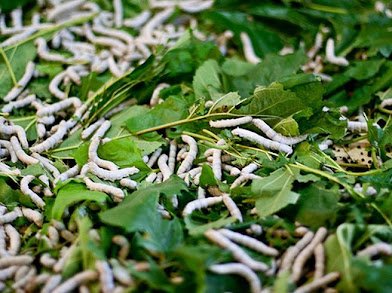
Silkworm rearing is a controlled biological process that can be done at home, in rural units, or on a commercial scale. What beginners learn: Silkworm life cycle stages, Temperature and humidity control, Feeding schedules, Disease prevention, Harvest timing. This stage transforms simple agricultural inputs into high-demand cocoons within 25–30 days.
Step 3: Cocoon Harvesting and Quality Evaluation
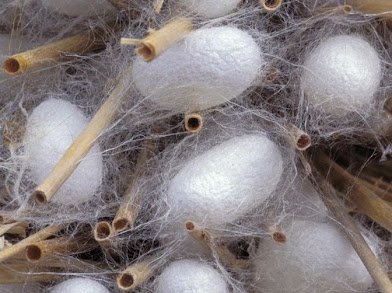
Not all cocoons are equal. Quality determines fiber length, strength, and market price. Important factors: Cocoon size and weight, Shell ratioUniformity, Clean harvesting techniques. Cocoons can be sold directly or processed further for higher profit.
Step 4: From Cocoon to Silk Fiber
This is where silk becomes a craft and a science. Processes include: Cocoon boiling or softening, Fiber reeling, Hand spinning or mechanical spinningYarn grading. Artisans and small producers can turn cocoons into premium silk threads with minimal equipment.
Step 5: Value-Added Silk Products
The real profitability of silk lies in value-added products, not raw materials alone. Examples: Hand-spun silk yarn, Silk fabrics and scarves, Handmade crafts and textiles, Fiber sheets for technical use, Entrepreneurs who focus on processing and branding can multiply income compared to raw cocoon sales.
Who Can Start an Organic Silk Project?
Organic silk production is flexible and inclusive. It suits:
Why Learn Silk Through Applied Courses?
- Students looking for low-cost projectsFarmers with land and irrigation
- Rural families seeking home-based incomeArtisans interested in textile crafts
- Entrepreneurs targeting premium markets
- Researchers exploring silk applications
Each group enters the same value chain—but at different points.
Many people fail in silk projects because they rely on fragmented or theoretical information. Applied learning offers:
- Step-by-step workflowsReal production scenarios
- Cost and profit analysisCommon mistakes and how to avoid them
- Scalable models for growthThis approach turns knowledge into measurable results.
- The Future of Organic Silk
- Global demand for sustainable materials is rising.
Organic silk stands at the intersection of: Green agricultureEthical textilesRural development, High-value manufacturing. Those who start learning and applying today will be positioned ahead of the market. Start Your Silk Journey. Organic silk production is not just a skill—it is a complete ecosystem of opportunities. With the right knowledge and guidance, silk can move from being a traditional craft to a modern, profitable project.Learn the system. Apply it smartly. Grow step by step
Hi, this is a comment.
To get started with moderating, editing, and deleting comments, please visit the Comments screen in the dashboard.
Commenter avatars come from Gravatar.